
Two histories, one window.
Seasonality and the midterm cycle point at the same stretch of calendar. The score came off zero for the first time since June, and the map moved down with it.

Last Sunday we wrote that the bond was finally the half cooperating. It took five sessions to reverse. The 10-year closed Friday at a fresh high, back through the line that has capped this market all summer, and it got there on oil rather than on data. When a call turns that fast, you say so in the first paragraph, not the last.
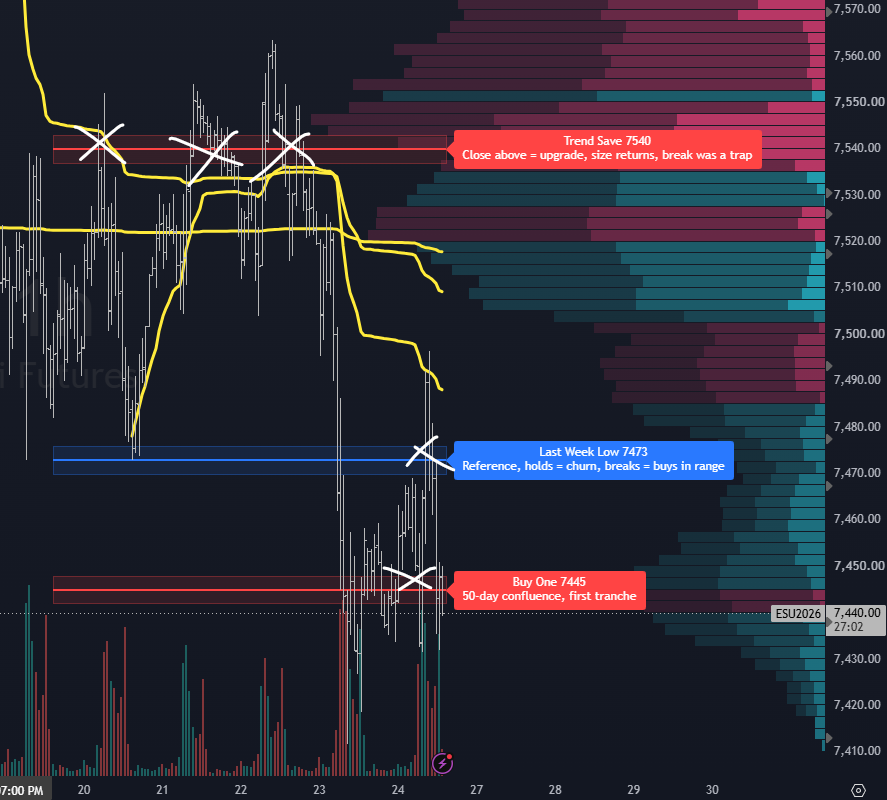
Here’s the grade, because that’s what you’re paying for. ES lost 0.67% on the week and the map did its job again. The shelf we drew held its first test to the tick, the same tick as the prior week, and paid an 81-point bounce. The buy zone underneath filled and closed exactly on the line. The deeper tranche never traded, so it never filled, and the defensive trigger we published never printed. That’s five straight weeks the first test of a published level was the entry.
One thing we got half right and should own: our upgrade trigger required a specific close plus the bond cooperating. Price delivered its half twice midweek. The bond didn’t. The upgrade correctly never fired, but by Wednesday we were describing that number as the middle of the range instead of the trigger it was. It was the trigger. The rule was right; the language drifted.
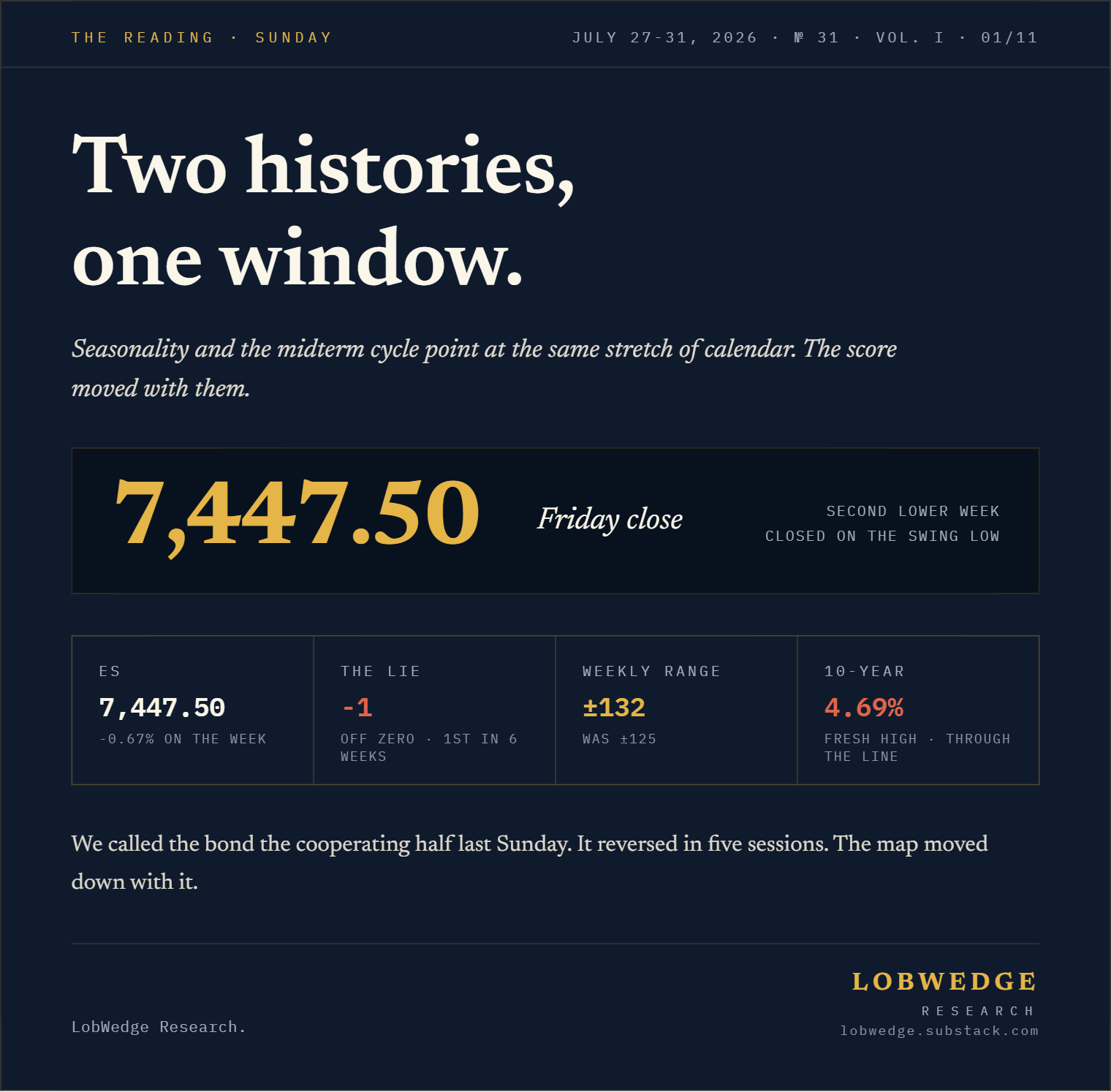
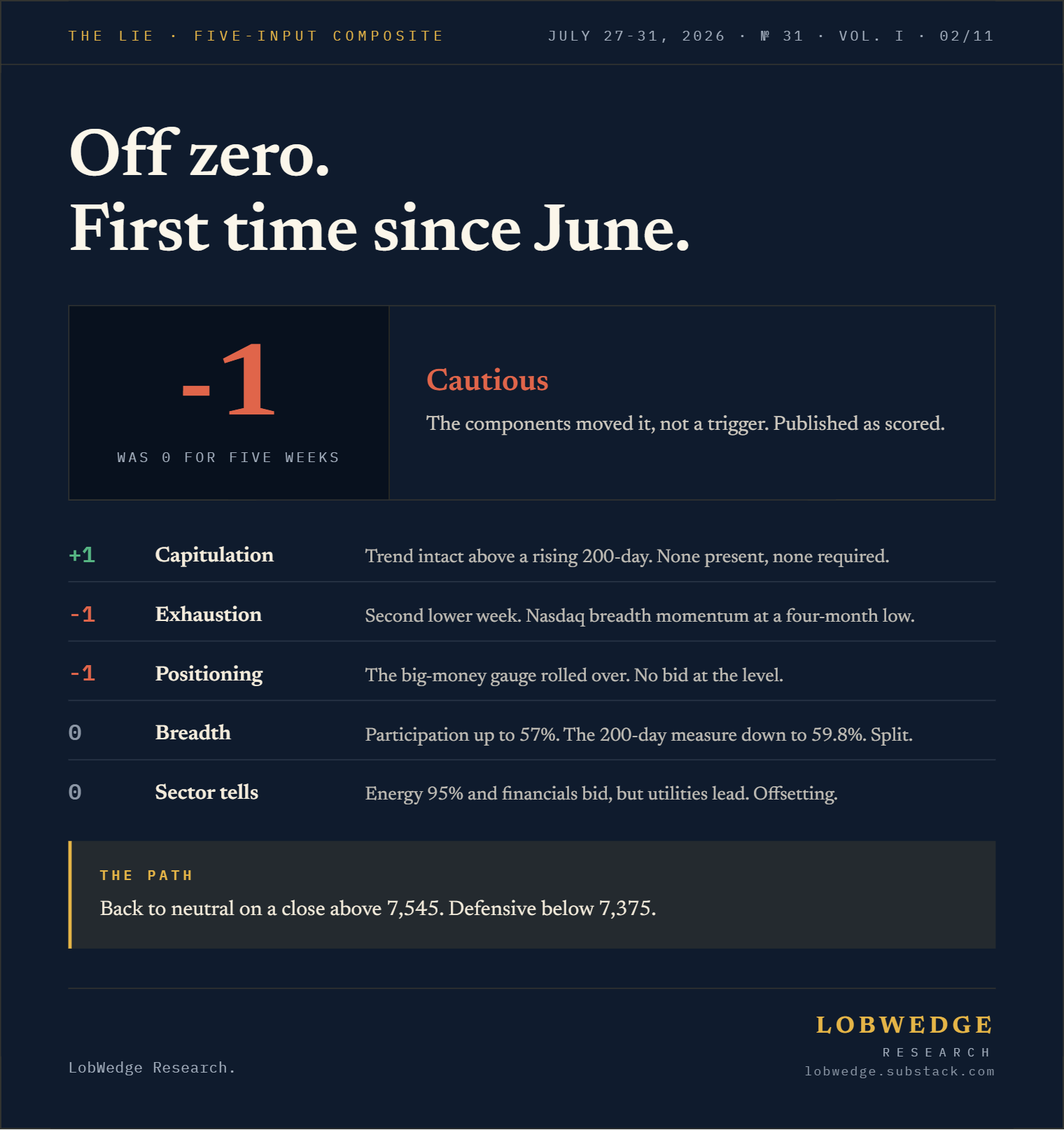
The Lie: -1 CAUTIOUS. First move off zero in six weeks. The components did it, not a hunch, and the piece below shows all five.
Now the part worth keeping even if you never subscribe.
The index looks calm and isn’t. Three-month implied volatility on the S&P sits near 15, while the same measure on the average stock in it sits near 40 (Goldman’s research). Index volatility is low because stocks are moving in opposite directions and cancelling out, not because anything is peaceful. Friday is the proof: the Dow gained 0.46%, the Nasdaq lost 1.2%, and the index closed up 0.05%. Nothing happened at the top while a great deal happened underneath.
That gap is a mechanical vulnerability, not a mood. If the average stock is already at 40 and stocks start moving together, index volatility doesn’t drift from 15 to 20. It jumps. And the single event most capable of making every stock move the same direction at the same minute is a central bank, which we have Wednesday at 2pm.
Below the fold: the full scorecard, the seven-level map with the new kill line, the one ticket worth resting and the price it waits at, the two seasonal histories that agree, and the signal that just fired and has never been negative a year later.
